
Capability
Assess requirements against structured, repeatable statuses.
Evaluate requirements and assessment objectives using consistent statuses so progress is measurable rather than anecdotal.
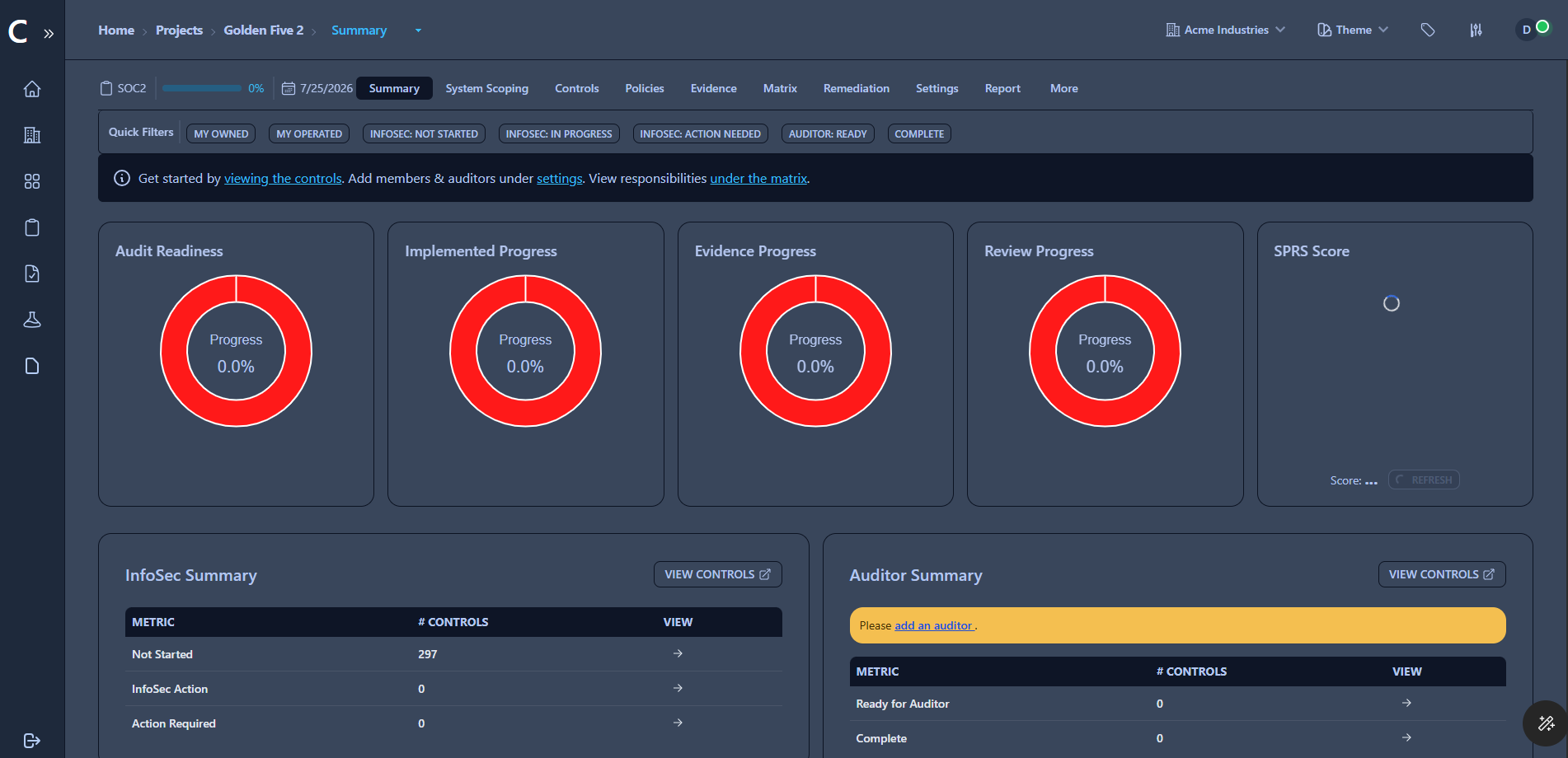
An assessment in CyberComply is a structured evaluation of the requirements that apply to a defined scope. Rather than a spreadsheet where everyone records progress differently, each requirement carries a status, supporting notes, and the evidence associated with it.
Assessment methods and terminology vary by framework. CyberComply keeps framework-specific language intact so that results remain defensible to the audience that will review them.
What it covers
Assessments in CyberComply
Consistent status values
Requirements can be recorded as Implemented, Partially Implemented, Not Implemented, Not Applicable, or Not Assessed, using the terminology appropriate to the framework in scope.
Assessment objectives
Where a framework decomposes a requirement into objectives, each objective can be evaluated individually so partial implementation is visible rather than hidden.
Notes and rationale
Record how a requirement is met, why something is not applicable, and what remains outstanding — so the reasoning survives staff turnover.
Traceable results
Assessment results connect to the evidence, findings, and remediation items produced from them, keeping the trail intact from evaluation to closure.
Typical flow
How the work moves
- Define scope
- Select framework
- Evaluate objectives
- Record status
- Attach evidence
- Generate findings
Related capabilities
Connected parts of the platform
Related frameworks
Where this capability applies
CyberComply is a software platform that assists organizations in managing governance, risk, compliance, documentation, and readiness activities. Using CyberComply does not by itself guarantee regulatory compliance, certification, authorization, or a successful assessment.
Ready to bring your compliance program together?
See how CyberComply can help centralize requirements, evidence, risks, remediation, documentation, and assessment readiness.